
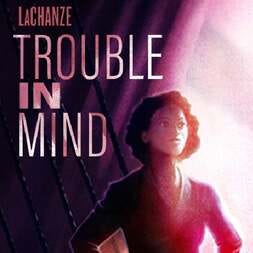
A revival that was originally written and performed Off-Broadway in 1955. The play was supposed to move to Broadway after its initial run, but was instead cancelled after Alice Childress, the playwright, refused to tone down her message. The play exposes the experience of Black actors during the time period and the stereotypical roles that were available to them. It satirizes the cluelessness of white people who feel they are helping to combat racism through their participation in the play when in reality they are only perpetrating it.
The Story
The play takes place in the 1950s on a Broadway stage where a group of actors are rehearsing a new play. Wiletta Mayer (LaChanze) is a veteran of the stage; she is jaded by the business, yet determined to continue working and find lasting success. Everything is running smoothly (more or less) until Mayer begins to question the denouement of the play. It's touted as an anti-lynching play that is ahead of its time, but the reality is quite the opposite. The director (Michael Zegen) has encouraged her to dig deep and utilize real emotions during her scenes, and in this process Wiletta begins to internalize the racism inherent in the play (presumably written by a white man). It takes awhile to get to this point though, and before we do the play trods along slowly. It's too long, and I think could have had the same effect even if it was edited down a bit.
The Performers
LaChanze's Wiletta is a joy to watch - she really does transform over the course of the play. In the beginning Wiletta is focused on the business of acting as a Black women in the 1950s and on how to stroke the director's ego enough to keep her job. By the end she stands up for herself and her opinions about the play. Zegen is also fun to hate as he gallivants around the stage directing and demanding the actors perform random snippets of the play using what he deems an experimental method.
All of the actors are strong and enjoyable to watch. Jessica Frances Dukes, as Millie Davis, is hilarious and provides a foil to Wiletta. Chuck Cooper, as Sheldon Forrester, plays his part obediently (even when his character must whittle a stick to no end) despite the fact that he has actually witnessed a lynching. The monologue where he tells the story is one of the most powerful scenes in the play. Danielle Campbell, as Judy Sears, is perfect as a naïve white girl with wealthy parents. She tries her best to be respectful but cannot stop saying the wrong thing. Similarly, Don Stephenson, as Bill O'Wray, does not know how to avoid offending his cast-mates and is very open about his ignorance.